

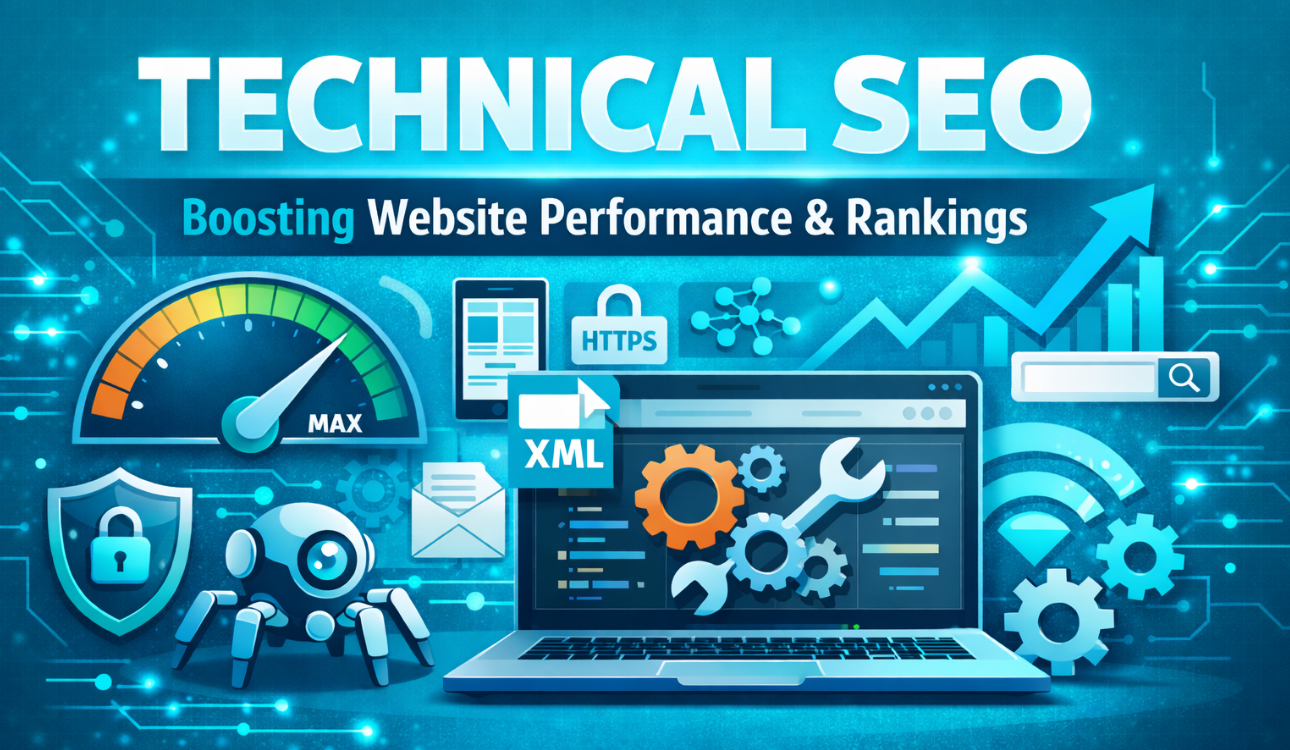
Search engine optimization is often associated with keywords, blogs, and backlinks. While these elements play a major role in improving search rankings, many businesses overlook the most important foundation of SEO success — Technical SEO.
Without a technically optimized website, even the best content may struggle to rank on Google. Search engines rely on a website’s technical infrastructure to crawl, index, and understand its pages. If the technical framework is weak, search engines may not properly access your content, resulting in poor visibility and lost traffic.
Technical SEO ensures that your website functions efficiently for both users and search engines. It improves website performance, strengthens search engine accessibility, and enhances the overall user experience.
For businesses that want sustainable online growth, technical SEO is not optional — it is essential.
What Is Technical SEO?
Technical SEO refers to optimizing the backend infrastructure of a website so search engines can easily crawl, interpret, and index its pages.
Unlike on-page SEO, which focuses on content and keywords, technical SEO works behind the scenes to ensure the website’s architecture supports search engine algorithms.
Key components of technical SEO include:
Secure website protocols (HTTPS)
Crawlability and indexability
Structured data implementation
XML sitemaps and robots.txt configuration
Fixing broken links and technical errors
These elements help search engines understand your website while ensuring visitors experience fast and smooth browsing.
When implemented correctly, technical SEO builds a strong digital foundation that supports every other SEO strategy.
Improving Website Crawlability and Indexing
Search engines use automated bots, known as crawlers, to scan websites and discover new pages. These bots analyze the structure of your website to determine which pages should appear in search results.
If a website’s structure is poorly optimized, search engines may struggle to access important content.
Technical SEO improves crawlability and indexing through several strategies:
• Creating a clear website architecture
• Optimizing internal linking
• Submitting XML sitemaps
• Managing robots.txt files
• Fixing crawl errors and redirect issues
A properly structured website allows search engines to navigate and understand content easily.
When search engines can efficiently crawl and index your website, your pages have a higher chance of appearing in relevant search results — which ultimately drives more organic traffic.
Enhancing Website Speed and Performance
Page speed is one of the most important ranking factors in modern search algorithms.
Slow websites negatively impact both user experience and search engine rankings. When pages take too long to load, visitors leave quickly, increasing bounce rates and reducing conversions.
Technical SEO improves website performance by implementing strategies such as:
• Optimizing images and media files
• Enabling browser caching
• Reducing server response time
• Implementing Content Delivery Networks (CDNs)
• Minimizing unnecessary code and scripts
Fast websites improve engagement, increase session duration, and support stronger search rankings.
In competitive industries, website speed can be the difference between ranking on page one or being invisible online.
Ensuring Mobile-Friendly Website Design
Today, the majority of users access websites through mobile devices. Because of this shift in user behavior, Google introduced mobile-first indexing.
This means Google primarily evaluates the mobile version of your website when determining rankings.
Technical SEO ensures mobile optimization through:
• Responsive website design
• Mobile-friendly navigation and touch elements
• Optimized loading speeds for mobile users
• Readable content across all devices
A mobile-friendly website improves usability, engagement, and search visibility.
Businesses that ignore mobile optimization risk losing both rankings and potential customers.
Strengthening Website Security
Website security is another essential factor in technical SEO.
Search engines prioritize secure websites to protect users from online threats. Websites using HTTPS encryption signal trust and reliability to both users and search engines.
Technical SEO strengthens website security through:
• SSL certificate implementation
• Secure data transmission
• Protection against malware and vulnerabilities
• Secure hosting environments
Secure websites build credibility and help improve search rankings.
Users are far more likely to trust and interact with a website that demonstrates strong security practices.
Improving User Experience Through Site Structure
A well-organized website improves both user experience and search engine understanding.
Technical SEO focuses on creating a logical site architecture that makes navigation easy and content accessible.
Best practices include:
• Creating clear navigation menus
• Maintaining structured URL formats
• Implementing breadcrumb navigation
• Eliminating duplicate content issues
These improvements make it easier for visitors to find information while helping search engines interpret the website structure.
User experience is a major ranking signal. When visitors stay longer and interact more with your website, search engines interpret this as a sign of quality and relevance.
Why Technical SEO Is the Backbone of SEO Success
Many businesses invest heavily in content marketing and link building but ignore technical SEO. This often leads to disappointing results because the underlying website infrastructure is not optimized.
Technical SEO acts as the foundation for every other SEO strategy.
When the technical structure is strong:
• Content gets indexed faster
• Search engines crawl pages efficiently
• Rankings improve consistently
• Website performance increases
• Organic traffic grows sustainably
Without technical optimization, even large SEO investments may fail to produce meaningful results.
This is why businesses serious about search visibility prioritize technical SEO early in their digital strategy.
How Technical SEO Supports Long-Term Growth
A technically optimized website is not just about rankings — it is about building a scalable digital asset.
Businesses that invest in technical SEO benefit from:
• Consistent search visibility
• Faster website performance
• Higher user engagement
• Improved lead generation
• Stronger brand authority
When the website infrastructure is optimized, marketing efforts become significantly more effective.
Technical SEO ensures your website is ready to support growth for years to come.
Why Businesses Choose SEOFOX.io for Technical SEO
At SEOFOX.io, technical SEO is not treated as a checklist — it is implemented as a strategic growth framework.
Our approach focuses on building technically strong websites that dominate search visibility and generate consistent leads.
Our technical SEO services include:
• Comprehensive technical SEO audits
• Core Web Vitals optimization
• Website speed optimization
• Advanced crawlability and indexing improvements
• Mobile optimization
• Structured data implementation
• Website architecture optimization
We combine technical expertise with strategic SEO planning to ensure every website becomes a powerful digital asset.
Final Thoughts
Technical SEO plays a crucial role in ensuring that websites perform efficiently for both users and search engines.
From improving crawlability and page speed to strengthening security and mobile usability, technical optimization directly influences search rankings and website performance.
Businesses that want long-term search visibility must invest in a strong technical foundation.
A well-optimized website not only improves rankings but also creates better user experiences, stronger engagement, and sustainable digital growth.
Want to unlock the full potential of your website?
If your website is struggling with slow performance, indexing issues, or poor rankings, it may be time for a technical SEO audit.
Visit SEOFOX.io and discover how our technical SEO experts can help your business achieve higher rankings, faster websites, and more qualified leads.
Frequently Asked Questions (FAQ)
What is Technical SEO?
Technical SEO refers to optimizing the backend structure of a website so search engines can efficiently crawl, index, and understand its pages. It focuses on factors like site speed, mobile responsiveness, structured data, security, and website architecture to improve search rankings and performance.
Why is Technical SEO important for website rankings?
Technical SEO ensures that search engines can properly access and interpret your website. Without it, even high-quality content may fail to rank because search engines cannot crawl or index the pages effectively.
What are the key elements of Technical SEO?
The main components of technical SEO include website speed optimization, mobile-friendly design, HTTPS security, XML sitemaps, robots.txt configuration, structured data, fixing crawl errors, and improving website architecture.
How does Technical SEO improve website performance?
Technical SEO improves performance by optimizing page load speed, reducing server response times, compressing images, and minimizing unnecessary code. Faster websites provide better user experience and rank higher in search engines.
What is crawlability in Technical SEO?
Crawlability refers to how easily search engine bots can access and navigate a website’s pages. Proper internal linking, clear site structure, XML sitemaps, and optimized robots.txt files help improve crawlability.
How does mobile optimization affect SEO?
Search engines use mobile-first indexing, meaning they primarily evaluate the mobile version of a website for rankings. Technical SEO ensures responsive design, fast mobile loading speed, and better usability across devices.
What is the difference between Technical SEO and On-Page SEO?
Technical SEO focuses on the infrastructure of a website, such as speed, indexing, and security. On-page SEO focuses on optimizing content, keywords, meta tags, and internal linking to improve relevance for search queries.
How often should a website perform a Technical SEO audit?
Businesses should conduct a technical SEO audit at least every 3–6 months or whenever major website updates are made. Regular audits help identify issues that may affect search rankings or website performance.
Can Technical SEO increase organic traffic?
Yes. Technical SEO improves crawlability, indexing, and website speed, which helps search engines rank pages more effectively. Higher rankings result in increased organic traffic and better visibility.
Why choose SEOFOX.io for Technical SEO services?
SEOFOX.io provides advanced technical SEO audits, website performance optimization, and infrastructure improvements that help businesses rank higher and generate consistent organic traffic. Our approach focuses on building technically strong websites designed for long-term digital growth.
Contact SEOFOX.io today and build a website that search engines love and customers trust.
👉 Follow us on LinkedIn:
https://www.linkedin.com/company/seofox-io/


