

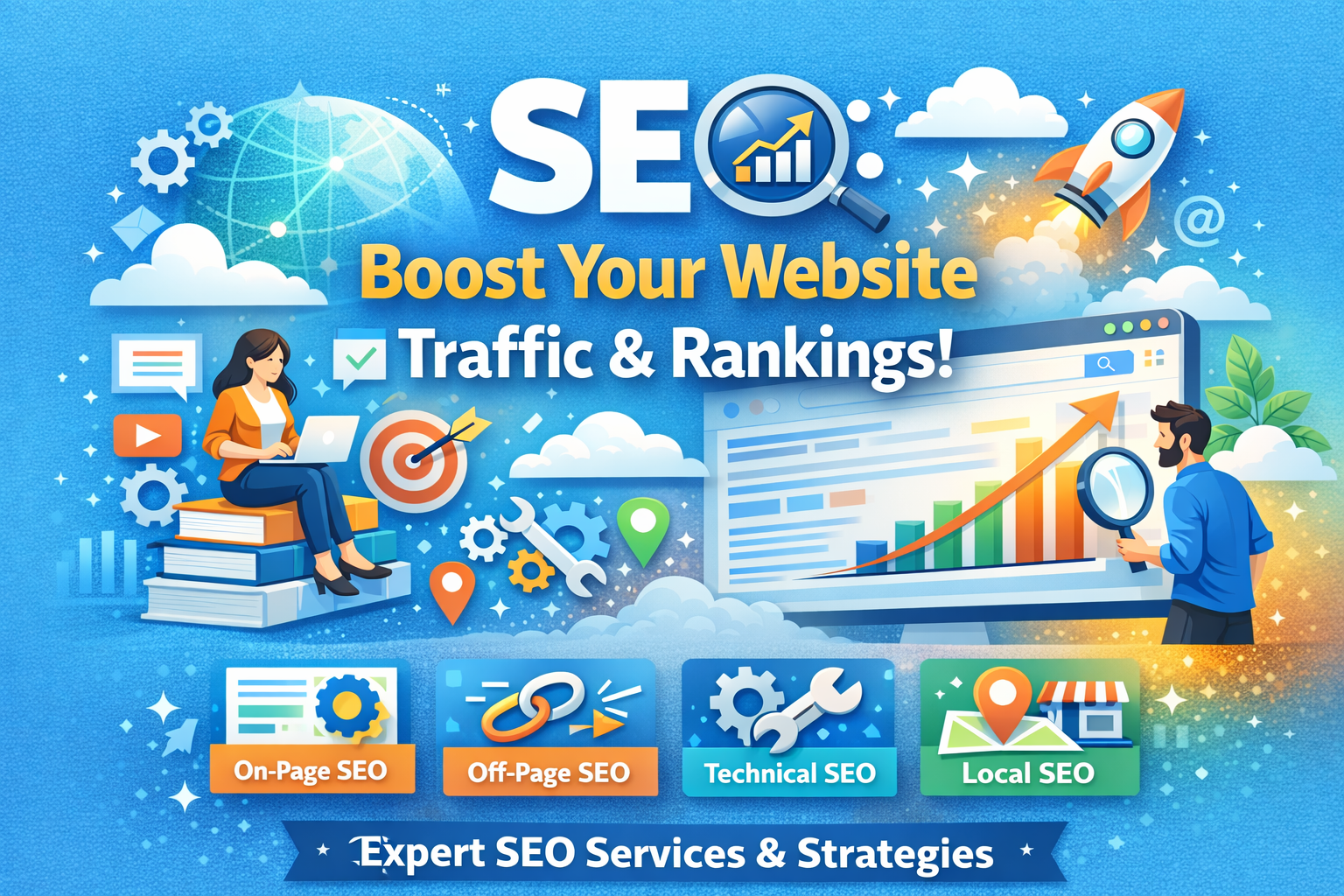
Introduction
In today’s digital world, simply having a website is not enough. If people cannot find your website on search engines, your business may miss valuable traffic and potential customers. This is where Search Engine Optimization (SEO) becomes essential.
SEO helps websites appear higher in search engine results when users search for relevant keywords. When implemented correctly, SEO can drive consistent organic traffic, increase brand visibility, and generate more leads. What is SEO? SEO (Search Engine Optimization) is the process of optimizing a website so it ranks higher in search engine results like Google. SEO helps websites increase organic traffic, improve visibility, and attract potential customers without relying on paid advertising.
Businesses that invest in SEO often experience long-term growth because organic search traffic is one of the most reliable sources of website visitors. Understanding what is SEO is essential for any business that wants to improve its visibility in search engines and attract organic traffic.
If you want to learn more about professional SEO services, you can explore the solutions offered by seofox.io
What Is SEO?
Search Engine Optimization (SEO) is the process of improving a website so that it ranks higher in search engine results pages (SERPs) for relevant search queries.
Search engines like Google analyze many factors to decide which pages should appear at the top of search results. SEO focuses on optimizing these factors so that search engines can easily understand your website and consider it valuable for users.
The main goals of SEO include:
Increasing organic website traffic
Improving search engine rankings
Enhancing website visibility
Generating leads and conversions
SEO is a long-term strategy, but when done correctly, it can provide continuous traffic without paid advertising.
Learn more about SEO strategies here:
https://seofox.io/services/
What Is SEO And Why Is It Important
SEO plays a crucial role in digital marketing because most online experiences begin with a search engine.
Here are some key reasons why SEO is important:
1. Increased Organic Traffic
Higher rankings lead to more visibility, which increases the chances of users visiting your website.
2. Cost-Effective Marketing
Unlike paid advertisements, organic traffic generated through SEO does not require ongoing advertising costs.
3. Better User Experience
SEO also focuses on improving website speed, structure, and usability.
4. Builds Credibility and Trust
Websites that rank higher on search engines are often perceived as more trustworthy.
For insights into SEO and digital marketing trends, visit the blog section:
https://seofox.io/blog/
Types of SEO
SEO is generally divided into several categories based on the optimization techniques used. Each type plays an important role in improving a website’s performance. Understanding what is SEO also means knowing the different types of SEO strategies that help websites improve their search engine rankings.
1. On-Page SEO
On-Page SEO refers to all optimization activities that are performed directly on a website.
These optimizations help search engines understand the content of your pages.
Key On-Page SEO Elements
Keyword optimization
Title tags and meta descriptions
Heading structure (H1, H2, H3)
Internal linking
Image optimization
Content quality
For example, if you are writing a blog about SEO tips, you should naturally include relevant keywords in headings, titles, and throughout the content.
Good on-page SEO ensures that search engines clearly understand what your page is about.
2. Off-Page SEO
Off-Page SEO focuses on activities that happen outside your website to improve its authority and credibility.
The most important factor in off-page SEO is backlinks.
Backlinks are links from other websites pointing to your website. Search engines treat these links as signals of trust.
Common Off-Page SEO Strategies
Guest blogging
Influencer collaborations
Social media promotion
Brand mentions
Directory submissions
High-quality backlinks from reputable websites can significantly improve your rankings.
3. Technical SEO
Technical SEO involves optimizing the technical aspects of a website so that search engines can crawl and index it efficiently. To fully understand what is SEO, it is important to learn how technical SEO helps search engines crawl and index websites efficiently.
Even if your content is excellent, poor technical SEO can prevent search engines from properly ranking your website.
Important Technical SEO Factors
Website speed optimization
Mobile friendliness
Secure HTTPS connection
XML sitemaps
Structured data (schema markup)
Fixing broken links
Technical SEO ensures that search engines can easily access and understand your website.
4. Local SEO
Local SEO helps businesses appear in search results for location-based searches.
For example, when someone searches:
“SEO company near me”
“Digital marketing agency in Mumbai”
Local SEO helps businesses appear in Google Maps and local search results.
Key Local SEO Factors
Google Business Profile optimization
Local keywords
Customer reviews
Local citations
Location-specific content
Local SEO is especially important for businesses that serve specific geographic areas.
5. E-commerce SEO
E-commerce SEO focuses on optimizing online stores so their products appear in search results.
This includes optimizing:
Product pages
Category pages
Product Descriptions
Structured product data
Customer reviews
E-commerce SEO helps online stores attract more potential buyers from search engines.
6. Content SEO
Content SEO focuses on creating high-quality content that answers user queries and attracts organic traffic.
Content types that perform well include:
blog articles
guides
tutorials
case studies
infographics
Search engines reward websites that consistently publish valuable and informative content.
Explore helpful SEO articles here:
https://seofox.io/blog/
Table: Types of SEO Explained
| Type of SEO | What It Focuses On | Key Activities | Main Benefit |
|---|---|---|---|
| On-Page SEO | Optimizing content and elements inside a webpage | Keyword optimization, title tags, meta descriptions, internal linking | Helps search engines understand page content |
| Off-Page SEO | Building authority outside the website | Backlinks, guest blogging, social sharing | Improves website credibility and domain authority |
| Technical SEO | Improving website structure and performance | Website speed, mobile optimization, XML sitemaps, crawlability | Helps search engines crawl and index the website properly |
| Local SEO | Optimizing for location-based searches | Google Business Profile, local keywords, reviews | Helps businesses appear in local search results |
| Content SEO | Creating high-quality content for users | Blog writing, guides, tutorials, keyword targeting | Drives organic traffic through valuable content |
How Search Engines Work
To understand SEO better, it is helpful to know how search engines operate.
Search engines follow three main steps:
Crawling
Search engine bots scan websites and discover pages across the internet.
Indexing
After crawling, the pages are stored in the search engine’s database.
Ranking
When a user performs a search, the search engine ranks pages based on relevance and quality.
SEO helps ensure that your website performs well during all these stages.
Basic SEO Best Practices
To improve your website’s SEO performance, follow these best practices:
Conduct proper keyword research
Create helpful and original content
Optimize titles and meta descriptions
Improve website speed
Build high-quality backlinks
Maintain a clear website structure
Consistent optimization can significantly improve long-term search visibility. Businesses that understand what is SEO and apply best practices consistently can achieve long-term growth through organic traffic.
Conclusion
Search Engine Optimization (SEO) is one of the most powerful digital marketing strategies for increasing website visibility and driving organic traffic.
By understanding the different types of SEO — including on-page SEO, off-page SEO, technical SEO, local SEO, and content SEO — businesses can build a strong foundation for sustainable online growth. Understanding what is SEO is essential for businesses that want to grow online. SEO helps websites improve search rankings, increase organic traffic, and build long-term visibility on search engines.
Although SEO requires time and effort, the long-term benefits can be significant. Websites that invest in proper SEO strategies often experience higher rankings, increased traffic, and better brand recognition. According to Google’s SEO starter guide, search engines use crawling, indexing, and ranking systems to understand and display webpages in search results.
To explore professional SEO strategies and digital marketing solutions, visit:
https://seofox.io/
Frequently Asked Questions (FAQs)
What is SEO in simple terms?
SEO (Search Engine Optimization) is the process of improving a website so it appears higher in search engine results. It helps websites attract more organic traffic from search engines like Google.
Why is SEO important for websites?
SEO is important because it increases website visibility in search engines. Higher rankings help businesses get more visitors, potential customers, and brand awareness without relying only on paid advertising.
What are the main types of SEO?
The main types of SEO include:
On-Page SEO
Off-Page SEO
Technical SEO
Local SEO
Content SEO
Each type focuses on improving different aspects of a website’s performance in search engines.
How long does SEO take to show results?
SEO is a long-term strategy. Most websites start seeing noticeable improvements within 3 to 6 months, depending on competition, keyword difficulty, and optimization efforts.
What is the difference between SEO and paid ads?
SEO focuses on improving organic search rankings, while paid ads require businesses to pay for visibility in search results. SEO generates long-term traffic, whereas ads stop bringing traffic once the budget is exhausted.
Can small businesses benefit from SEO?
Yes, SEO is especially beneficial for small businesses. It helps them compete with larger brands by targeting specific keywords and local searches.
What is Local SEO?
Local SEO focuses on optimizing a business’s online presence so it appears in location-based searches such as “SEO company near me” or “digital marketing agency in Thane.”
Is SEO better than social media marketing?
Both are important, but SEO typically provides more sustainable long-term traffic, while social media helps with brand engagement and audience interaction.
What is SEO and how does it work?
SEO (Search Engine Optimization) is the process of improving a website so it ranks higher in search engines like Google. It involves optimizing content, improving website structure, building backlinks, and enhancing user experience.
Stay Updated With the Latest SEO Insights 🚀
SEO is constantly evolving, and staying updated with the latest strategies is essential for businesses that want to grow their online presence. If you want to learn more about SEO strategies, digital marketing tips, and search engine updates, make sure to stay connected with our team.
Follow seofox.io on LinkedIn to get regular insights, marketing tips, and industry updates from our experts.
👉 Follow us on LinkedIn:
https://www.linkedin.com/company/seofox-io/
You can also explore our SEO services and digital marketing solutions to help your business grow online:
https://seofox.io/services/


